

Affections
The Long-Awaited Arrival
After nine long months in the making, your little one is finally here, nestled in your arms.
Like all human babies, they are not yet fully mature. Their brain, immune system, and digestive balance will continue to develop over the first months of life. But their parents are there to care for them and provide everything they need to grow.
Mom, Breastfeed Me!
Breast milk is perfectly suited for babies—far better than formula. Why? Because beyond containing the same nutrients as formula (without cow’s milk proteins), it also provides antibodies, prebiotics, and probiotics to support your baby’s gut flora. Additionally, the act of suckling helps maintain good cranial mobility. And let’s not forget the comfort of a cuddle, which reassures the baby.
No, dads are not excluded. They can give a bottle of expressed breast milk, help with bath time, or be present in countless other ways.
This article is not here to make anyone feel guilty. Parents may choose, with full awareness, not to breastfeed. Formula is an adequate replacement that meets micronutrient needs, but it lacks the other benefits. It is also made from cow’s milk, which can be allergenic (Cow Milk allergy)
Myths About Breastfeeding
We’ve all heard them: "My breasts are too small," or "My milk isn’t rich enough."
Mechanical Issues
Physiologically, it is extremely rare for a woman to be unable to breastfeed. The most common reasons are related to breast surgeries or inverted nipples. Even then, solutions exist.
Most difficulties stem from the baby’s position during feeding or issues with their jaw and swallowing. Seeing an osteopath at birth is highly recommended to help establish comfortable breastfeeding. If the baby does not latch properly, milk production can quickly decline, and painful cracks can develop.
Seek guidance from a lactation consultant.
Not Nutritious Enough?
Breast milk is always nutritious. Even women in severe malnutrition can feed their babies; nature always prioritizes the next generation. A mother will deplete her own reserves to feed her child, sometimes at her own health’s expense.
Why do people say some milk isn’t nourishing enough?
-
In the 1980s, researchers analyzed the composition of breast milk at the start of a feeding. When they start suckling, milk is mainly water and sugar, designed to quench thirst. When a baby is hungry, they nurse longer, and the milk becomes fattier towards the end. If your baby cries a lot and seems hungry, keep them on the same breast longer; he will get more nutrients.
-
Sometimes, babies cry and seem inconsolable, wanting to nurse constantly. They might be going through a growth spurt, signaling the body to adjust milk composition.
Breastfeeding is a fascinating dance between mother and baby—one we understand much better today. Don’t get discouraged, and seek help as soon as possible.
Breastfeeding should not be painful; it is a natural process that may just take some time to adjust. As for cracked nipples, they heal well with breast milk compresses.
Prematurity and Omega-3 Deficiency
A premature baby hasn’t had the time to fully develop. Unlike full-term babies, they haven’t had the chance to store fatty acids under their skin before birth.
The first consequence is increased sensitivity to cold due to a lack of insulation. But these essential fatty acids, omega-3, also play a crucial role in brain function, gene regulation, fat cell production, inflammation control, and cell communication. They are truly indispensable.
A premature baby will need to make up for this omega-3 deficiency through diet. DHA, in particular, is essential for brain development. The best approach is to supplement the mother, who will then pass them to her baby through breast milk. Later, after six months, DHA-enriched oils can be used during food diversification.
Gastroesophageal Reflux
Reflux is different from simple spit-up. If your baby drinks too much and regurgitates fresh milk without discomfort, there’s no need to worry. But if they vomit digested milk while crying, they likely have reflux.
Symptoms of Reflux
Most babies exhibit multiple signs:
- Crying when laid on their back
- Wanting to nurse constantly (to soothe esophageal burning)
- Night time waking with screams
- Frequent hiccups, sometimes with choking sounds
- Persistent dry cough
- Recurrent ear infections
Reflux is caused by acid rising up and burning the esophagus. It is very painful, and most medications are not very effective, often causing long-term side effects. Proton pump inhibitors reduce stomach acid, disrupting digestion and affecting the entire digestive system.
Why Do Some Babies Have Reflux?
Some babies struggle to control the valve that closes their stomach. A good osteopathy session can help restore proper function.
If reflux persists, diet should be examined.
Reflux is a warning sign from the body that an ingested food is not being well tolerated. No medication will fix this. The baby is likely suffering from a food intolerance.
But What if They’re Exclusively Breastfed?
Many proteins pass through breast milk, particularly casein (cow’s milk protein) and gliadin (gluten).
The best way to test for food intolerance is to eliminate cow’s milk products for one week. If there’s no improvement, try removing gluten for another week.
In most cases, reflux will resolve. The effort required for the mother is significant, but it’s only temporary. Avoidance is needed only during breastfeeding, and many babies outgrow their intolerance.
What if They’re Formula-Fed?
Try a rice-based formula (available in supermarkets and pharmacies) or goat’s milk formula.
However, do not give homemade plant-based or goat’s milk directly. Only infant formulas with controlled and balanced compositions should be used, to prevent serious deficiencies.
If a healthcare provider dismisses reflux with "That’s just how babies are," don’t accept it. Spit-up from an immature digestive system is normal. But a baby suffering from refluxs in pain, and there are alternatives beyond medication.
Infant Colic
Colic has three main causes. Like reflux, colic should not be dismissed as "normal" if a baby cries in pain after each meal. Solutions exist.
1. Low-Fat Milk Intake
A baby who frequently switches breasts may consume mostly the watery foremilk rather than the fattier hindmilk. This can lead to greenish stools, bloating, and discomfort.
The solution is simple: let the baby finish one breast before switching. If one breast is still full after feeding, start the next session on the same side and pump the other side to prevent engorgement. Stools should return to a golden-yellow color.
2. Food Intolerance
Some foods irritate the baby’s intestines—spicy dishes, cabbage, onions, cow’s milk, gluten… Ever noticed how your milk smells like curry after a spiced meal? Some babies take time to process strong flavors. If they react, consider avoiding those foods.
If colic is frequent, identify the culprit or try eliminating cow’s milk and gluten. If formula-fed, switch to a non-cow’s milk formula.
3. Imbalanced Gut Flora
A baby’s gut microbiome plays a crucial role in digestion, immunity, nutrient absorption, and overall well-being.
In the womb, the baby lived in a sterile environment. At birth, they populate their intestines with bacteria from the mother’s vaginal flora, skin, and breast milk.
A C-section limits exposure to maternal vaginal flora, which can delay microbiome development. Similarly, maternal yeast infections can lead to overgrowth of Candida in the baby’s gut, disrupting balance.
In such cases, restoring the baby’s gut flora is essential. Signs like oral thrush may indicate an imbalance. Seek professional advice if needed. Candida is best handled with energetic methods to avoid the use of toxic antifungal treatment.
Conclusion
A baby in distress is neither normal nor inevitable. Incessant crying is heartbreaking for parents, but solutions exist. Trust your instincts, seek support, and know that most of these issues can be resolved.
What exactly is a milk allergy? What is the difference between an allergy and an intolerance?
1. Lactose Intolerance
Lactose intolerance is the body's inability to digest the sugar found in milk. As children, we produce lactase (an enzyme that breaks down lactose) to digest milk. However, as we grow older, our lactase production declines.
In Europe, genetic mutations allow most people to digest milk beyond natural weaning age. However, in some populations, especially among Asians and Africans, adults produce little to no lactase, leading to lactose intolerance.
This intolerance causes digestive symptoms immediately after consuming milk, whether from cows, goats, or sheep:
- Diarrhea
- Nausea
- Bloating
- Intestinal pain
Unlike an allergy, lactose intolerance does not involve the immune system. It primarily affects adults. Those affected can take lactase enzyme supplements, available in pharmacies, to aid digestion when consuming dairy products like raclette or reblochon cheese.
2. Milk Allergy
Milk contains several allergenic proteins, with casein being the most problematic.
Cow’s Milk Protein Allergy is an immune reaction that varies in severity. While anaphylactic shock and swelling (oedema) are rare, the symptoms are often diffuse and non-specific, making diagnosis difficult.
Digestive Symptoms
- Chronic diarrhea
- Vomiting
- Blood in stool
- Abdominal pain
- Bloating
- Acid reflux and heartburn
Respiratory Symptoms
- Persistent cold-like symptoms
- Asthma
- Repeated ear infections (especially in children)
- Gritty sensation in the eyes
General Symptoms
- Irritability
- Sleep disturbances
- Poor growth
- Chronic constipation
- Eczema and hives
Persistent eczema and recurrent ear infections are particularly characteristic of milk allergies in children.
Milk Allergy in Babies: Reflux & Colic
It is a frequent cause of persistent reflux in babies. Even if the baby is breastfed, cow’s milk proteins from the mother’s diet can pass into breast milk, triggering a reaction in the baby.
For more details, see my article: Your Health > Conditions > Infant Reflux & Colic.
3. Milk and Leaky Gut
A common condition called leaky gut syndrome (see my article Leaky gut syndrome) can worsen reactions to milk proteins.
If the intestinal lining is too permeable, partially digested casein fragments can cross into the bloodstream, leading to widespread and hard-to-diagnose symptoms.
Casein & Gluten: Potential Links to Neurological Disorders
Studies are investigating links between casein (milk protein) and gluten (from wheat) and the following conditions:
- Leaky gut syndrome
- Hyperactivity
- Autism (ongoing research)
- Concentration difficulties
- Fibromyalgia and chronic pain
Opioid-Like Molecules
Certain food-derived proteins, including casein (milk) and gliadin (gluten), can act like endorphins in the body. When they enter the bloodstream due to a damaged intestinal barrier, they bind to opioid receptors, creating a dependency-like effect. Can't live without cheese or yogourt ? It might be worth checking your gut permeability.
This opioid effect is being studied in relation to:
- Autism and ADHD
- Brain fog and attention issues in gluten-sensitive individuals
Casein and Autoimmune Diseases
Casein has also been linked to Type 1 diabetes because its structure resembles pancreatic cells.
This antigenic similarity between casein and human tissues may contribute to autoimmune diseases, such as:
- Hashimoto’s thyroiditis
- Ulcerative colitis
- Rheumatoid purpura
A damaged intestinal lining must be healed in cases of gluten sensitivity or milk protein allergy to prevent further autoimmune activation.
4. Does Avoiding Milk Cause Deficiencies?
What About Calcium?
Contrary to popular belief, milk does not prevent osteoporosis. In fact, the countries that consume the most cow’s milk (the U.S. and Scandinavia) have the highest osteoporosis rates.
Why?
Although milk is rich in calcium, it shifts the balance to acidosis (The acid-base balance) due to its high protein and phosphorus content. To neutralize acidity, the body draws calcium, magnesium, and potassium from bones, sometimes leading to bone demineralisation—a similar effect to consuming acidic beverages like Coca-Cola.
Better Calcium Absorption
Calcium is best absorbed in an alkaline environment and in the presence of D vitamin.
To build strong bones, fruits, vegetables, and sunlight are more beneficial than milk.
How to Replace Cow’s Milk?
You don’t need to eliminate all dairy—safe alternatives exist:
- Goat’s and sheep’s milk (less allergenic)
- Butter (contains almost no protein/casein)
- Soy cream instead of dairy cream
- Plant-based milks (for coffee, baking)
- Baby formulas made from rice or goat/sheep milk
Supermarkets now offer sheep, goat, soy, and plant-based yogurts.
By making simple swaps, you can maintain a healthy, balanced diet without cow’s milk.

Largely unknown to the general public, it affects more than 60% of the population.
The symptoms are not limited to the digestive system and can even lead to autoimmune diseases.
What is a leaky gut ?
The intestine is made up of a tight barrier that only allows certain nutrients to pass through: trace elements, proteins broken down into amino acids, carbohydrates, and fatty acids. Under normal conditions, intestinal cells absorb the necessary elements and release them into the bloodstream. This tightness is ensured by tight junctions (shown in yellow below) between the cells.
Permeability and Junctions
As a result, all elements enter the cells through regulated absorption channels and mechanisms (illustrated by the blue flow). No unwanted molecules should cross this tight barrier.
When tight junctions are damaged, it allows many pathogens (bacteria, proteins, etc.) to infiltrate, disrupting digestion and affecting the entire body. These foreign molecules can saturate receptors meant for other essential substances on various organs (such as hormones and neurotransmitters). Often, the immune system detects these molecules and launches an unnecessary allergic-like immune response.
In advanced cases, this immune disorder can turn against the body's own organs, leading to autoimmune diseases.

What are the risk factors?
Leaky Gut is associated with inflammation of intestinal cells. Here are the main risk factors:
- Chronic use of anti-inflammatory drugs
- Stress
- Alcohol consumption
- Candida infection (see related article: Candida Infection)
- Viruses and food poisoning
- Intense physical activity
What are the symptoms?
The symptoms are many, making them difficult to identify independently. They are often linked to other serious conditions. Some of the most common symptoms include:
- Chronic intestinal diseases (Crohn’s disease, ulcerative colitis)
- Diarrhea, bloating
- Food allergies (milk, gluten, etc.)
- Thyroid disorders
- Meniere’s disease
- Joint and muscle pain (fibromyalgia)
- Autoimmune diseases (such as multiple sclerosis)
- Mineral absorption deficiencies
- Sleep and neurotransmitter disorders (see related article: Feed your brain)
- Depression, anxiety, hyperactivity
What can be done?
A medical consultation is necessary to determine whether your intestine has become overly permeable. Self-diagnosis is difficult in this case.
The first step is to reduce inflammation through a specific diet, which typically excludes cow’s milk proteins, gluten, and sometimes citrus fruits and raw vegetables for a period of time. These elements can irritate the intestine and worsen permeability.
The next step is to repair the damaged gut lining. This can involve a targeted diet, probiotics, and intestinal healing agents, depending on individual needs. However, it is crucial to choose the right probiotics, as different bacterial strains play specific roles in immune regulation. The treatment must be adapted based on the conditions associated with your gut.
This protocol generally lasts 4 to 6 months. Although changing eating habits for several months may seem challenging, the benefits are worth it. Once healed, your intestine may be able to tolerate foods that previously triggered unpleasant allergic reactions.
Not to mention the boost in energy levels!
I will soon be sharing some dairy-free and gluten-free recipes in my "Recipes" section to help you with this transition. The gluten-free walnut bread is particularly delicious! 😊

What is Candidiasis?
Candidiasis is an infection caused by a fungus. The symptoms are as varied as they are numerous.
Too often, they are mistaken for other more commonly searched conditions such as thyroid issues, arthritis, or even depression. The difficulty in diagnosing candidiasis is heightened by the fact that this fungus can infiltrate almost anywhere.
Candida albicans is responsible for the majority of candidiasis cases. Well-hidden in the body, it waits for any opportunity to manifest. At the first sign of immune disruption, it transitions from a single spore to a growing mycelial network. Its presence disrupts the balance of our microbiome, irritates mucous membranes, and creates a stressful environment for the immune system, which engages in a relentless battle against this intruder.
Once it has established its domain, Candidia has a major impact on the entire body. The intestine is the first to be affected, as its tight junctions become disorganized, leading to increased permeability. This causes a range of issues including food allergies and autoimmune diseases. By weakening the body, Candida opens the door to more serious pathologies.
Common Symptoms
Here is a list of symptoms in which you might recognize yourself:
- Fungal infections (mammary, vaginal, inguinal)
- Allergies
- Thrush
- Esophagitis

- Digestive issues, constipation
- Chronic cystitis
- And also, indirect signs:
- Chronic fatigue, exhaustion, burnout
- Recurrent infections as a sign of a weakened immune system (viruses, bacteria)
- Sleep disorders
- Anxiety
- Mood disturbances, hypersensitivity to stress
- Disruption of concentration and memory
- Development of allergies
- Eczema, hives
- Autoimmune diseases
- Food intolerances
- Unexplained weight gain
- Sweet cravings
- Fibromyalgia
- Gingivitis
Predisposing Factors
It is estimated that more than 50% of the population will experience Candidiasis at some point in their lives. Antibiotics, anti-inflammatories, stress, heavy metals, chemotherapy, diabetes, hypothyroidism, and the use of birth control pills are all factors that promote it.
Mothers, if you had fungal infections at the time of your child's birth and they suffer from thrush, there are solutions available to prevent the candidiasis from establishing itself. Take action during the early months to avoid creating a more long-lasting imbalance for your babies. Crying, difficulty sleeping, and gastric reflux. Candidia is a scourge that causes suffering for both parents and children. Probiotics are an effective and well-tolerated solution, even for babies just a few weeks old!
What to do?
While this picture might seem rather bleak, rest assured. Despite its persistence, it is possible to eliminate chronic candidiasis. But finding the right antifungal product is only a quarter of the solution.
To get rid of excess Candida, one must treat the basics:
- Stress, which impacts morale and immun system alike
- The immune system to avoid relapses
- Food - see down below
- The microbiome, to keep gut balance and avoid candida outbreak
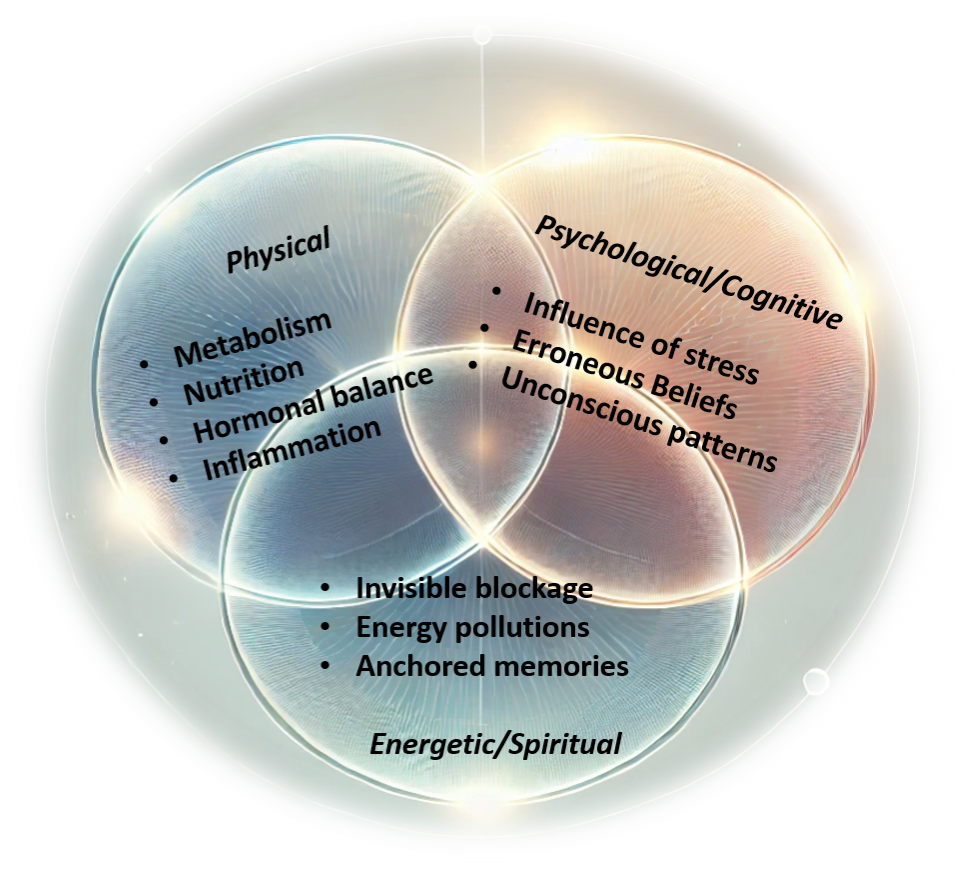
Don't hesitate to download this little guide below that summarises how the multidisciplinary approach is fundamental to treat Candidiasis.


Mutlidisciplinary approach
Energetic treatments are, so far, the best tolerated treatments given they will not rely on toxic substances. It is the perfect addition to natural remedies.
Every healer has their own remedy for eliminating candidiasis. However, keep in mind that what works for one person may not be suitable for another. Depending on your symptoms, the therapeutic approaches may be fundamentally different. A candidiasis with anxiety will not be treated the same as one accompanied by allergies.
The most important factor is to have a strong immune system; the fight against Candida is not won with antifungals, but with the restoration of intestinal equilibrium and a good reserve of vitamins !
Beware of Sugar!
There is, however, one universal factor: Candida loves sugar. It thrives on it and builds itself with it. Reduce the amount of sugar you consume, and you’ll have done half the work. Like an army with its supplies cut off, Candida won't be able to rebuild its troops.
Similarly, like all fungi, Candida thrives in acidic environments. Be sure to maintain a proper acid-base balance, as explained in the The acid-base balance article.
You have a Candida infection you can't get rid of ?
Think of our FongiClean program that associates both natural remedies and energetic treatment.
Connaissez-vous les effets des métaux lourds sur votre organisme ?